Between What Remains, Belco Arts
David Manley and Hilary Wardhaugh, curated by Alexander Boynes
27 March – 17 May 2026
Art historian and retired academic Gordon Bull would begin each lecture in the darkened theatre at the Australian National University with a sudden pivot toward the audience, a wry smile, and the same understated provocation: “Now LOOK!” Delivered with quiet insistence, the phrase revealed its force only through repetition. It was never merely an introduction, but a demand for attention. A call to active seeing. Not to glance, but to look. Not to receive passively, but to question what appears before us, and how it has come to appear in the first place.
Between What Remains unfolds within precisely this terrain of heightened attention. It occupies the unstable space between appearance and belief, where perception becomes inseparable from interpretation and where the image is understood not as neutral record but as an active proposition. Here, photographs do not offer certainty; they offer constructed conditions. They do not confirm reality; they complicate it. To encounter this exhibition is to enter a field in which looking itself becomes the subject, shaped by memory, ideology, experience, and expectation.
This exhibition reunites David Manley and Hilary Wardhaugh in a renewed dialogue shaped by shared beginnings in Belconnen, within their hometown of Kamberri/Canberra. They came of age in a newly forming suburban landscape where Brutalist civic structures rose from bushland, where an artificial lake reflected an engineered horizon, and where urban planning imposed geometric order onto older ecological rhythms. Beneath this planned suburban surface lies Ngunnawal Country, a far deeper continuum of time and presence that long precedes settlement and the built environment. The landscape of their youth was marked by construction and imposition, estrangement and aspiration. It was a terrain where modernist ambition met ecological inheritance, and where civic certainty stood uneasily upon deep time. That environment quietly shaped the visual languages both artists would later develop, inflecting their work with an awareness of how human systems overlay, interrupt, and attempt to stabilise the land.
As teenagers and young adults, they shared both a romantic relationship and a workplace. One night shift, reading the jobs section during a break at the now-demolished Royal Canberra Hospital, itself another stark concrete structure perched beside an artificial lake, they discovered accompanying work opportunities in Sydney. Soon after, they left the capital to pursue their futures. Their lives diverged romantically and professionally, yet what followed were not opposing trajectories so much as parallel paths shaped by shared origins and the slow sedimentation of experience. That early departure, both geographical and emotional, would later echo through their practices, where landscape and architecture operate not simply as subjects but as sites of memory, rupture, and return.
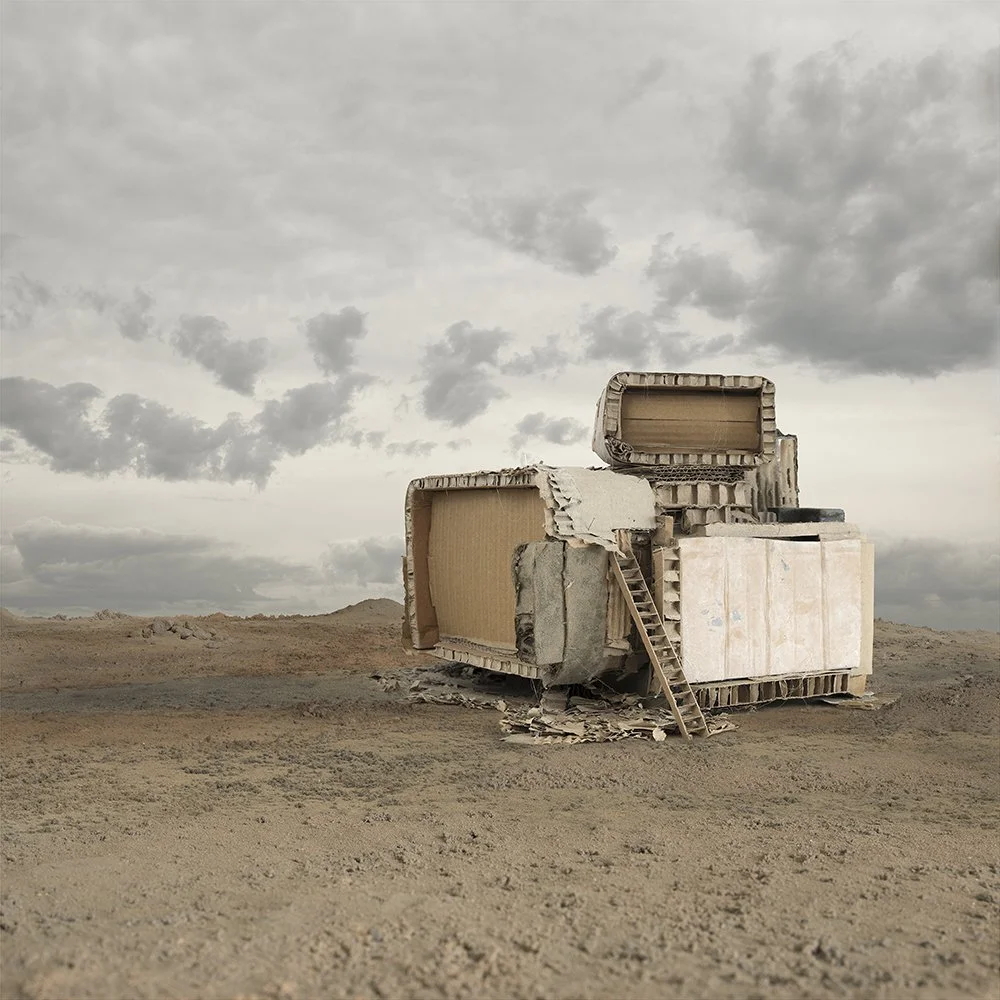
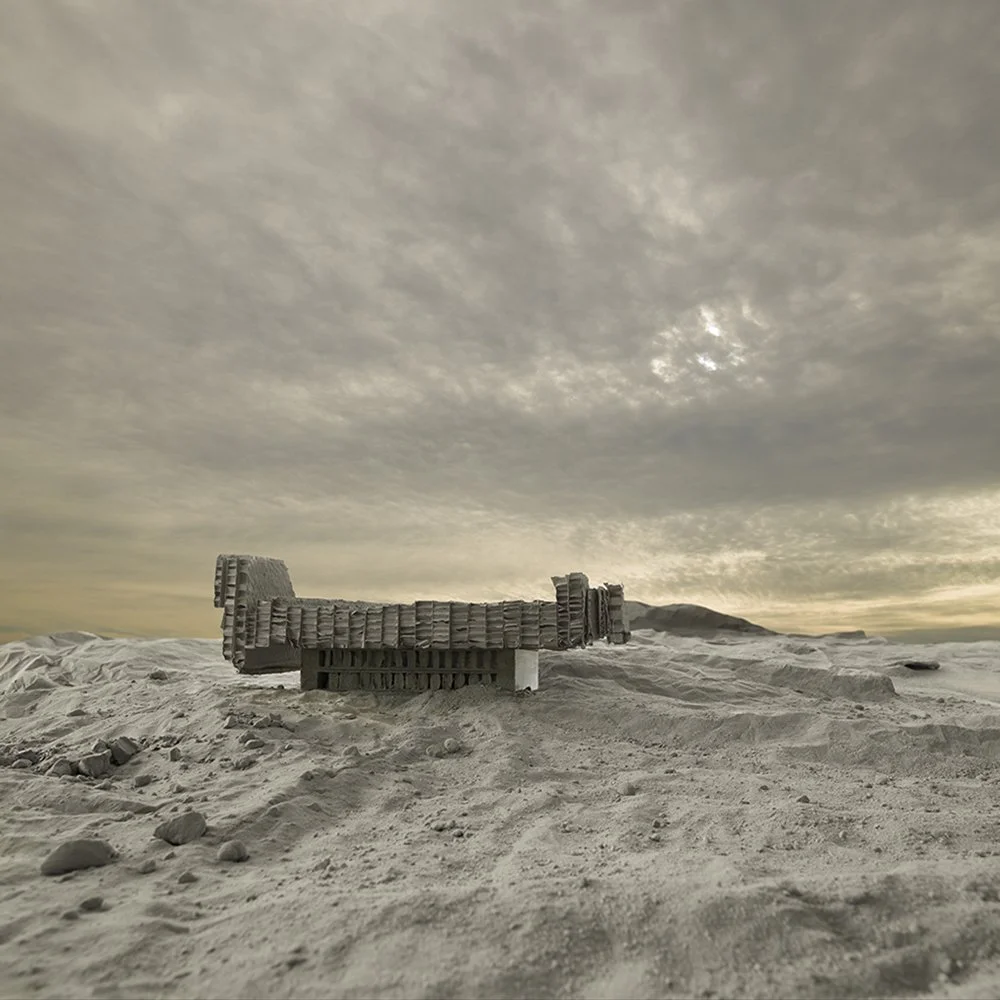
David Manley is a Warrane/Sydney based photographic artist whose practice spans constructed image-making, installation, and theoretical research into the psychological and temporal dimensions of photography. Central to his work is the construction of architectural models and dioramas that are photographed to produce images occupying an ambiguous position between document and fabrication. These environments are frequently sealed, suspended, or emptied of human presence, suggesting spaces held in temporal stasis. They appear at once precise and estranged, recognisable yet inaccessible. Manley’s research into trauma and media culture positions the photograph not as passive witness but as an active agent capable of transmitting affect across time. His images often stage architectural forms as containers of anxiety, as though memory itself were embedded in facades and roof lines.
Hilary Wardhaugh is a Kamberri/Canberra-based photographer whose practice bridges documentary, political, and experimental image-making. Working professionally since the late 1990s, including within the Parliamentary Press Gallery, she has long engaged with photography’s power to frame public understanding of social and environmental conditions. Her artistic practice moves between reportage and experimentation, frequently incorporating analogue processes such as lumen printing, layered exposures, and reflective surfaces. These techniques introduce contingency and duration into the photographic surface, resisting the frictionless authority of contemporary digital production. Wardhaugh’s projects address environmental crisis, systems of governance, and the politics of visibility, often foregrounding how landscapes are shaped by extraction, containment, and regulatory control. Her involvement in feminist and collaborative initiatives has further sharpened her engagement with questions of agency and representation within photographic culture.
Across both practices, the built and natural environments become speculative ground where architecture, ecology, and memory converge. Manley’s constructed photographic works examine architecture as psychological residue, where narrative suspends and time fractures. In Post Traumatic Urbanist #5, the remains of a Brutalist structure sit amid the rubble of a devastated landscape. A low, diffused sun breaks through a clouded sky, lending the scene a faint, almost implausible note of hope. Yet the image resists stability. The boulders in the foreground appear disproportionately large, their granular texture subtly out of scale. The monolithic building begins to register not as concrete mass but as something more provisional, perhaps a modest cardboard construction. The sky itself becomes suspect. What initially reads as documentary coherence reveals itself as temporal and spatial disjunction. Everything depicted has existed, yet never in the same moment, scale, or place. This slippage between the believable and the constructed is central to the unsettling allure of Manley’s digitally collaged diorama works, where realism and artifice are held in productive tension.
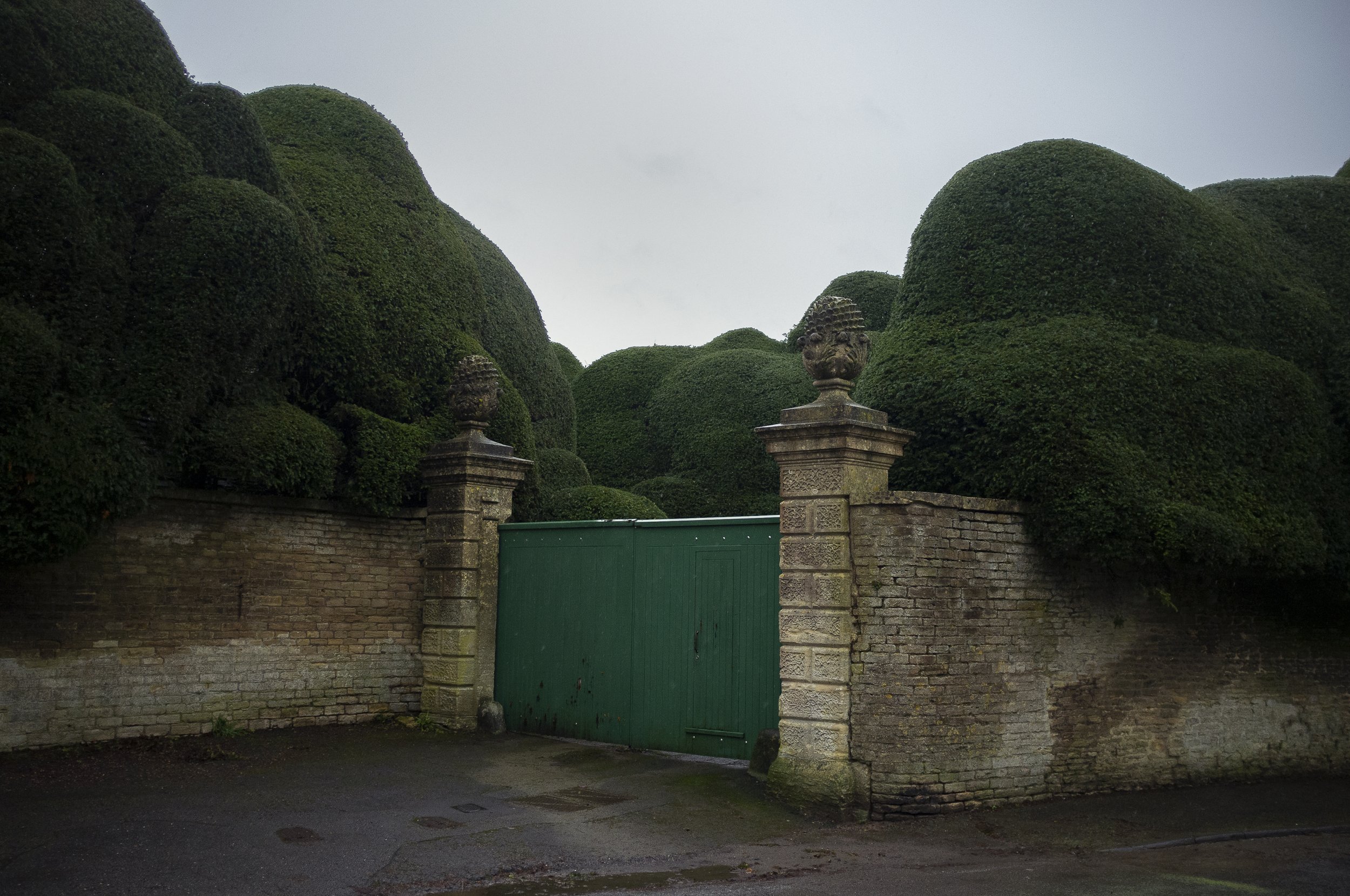
Wardhaugh’s images, by contrast, approach landscape through a sustained negotiation with containment. Her photographs trace the ordering of nature within systems of management and control, while remaining attentive to the subtle ways in which ecological forces exceed imposed boundaries. In Full To Overflowing, decaying brick walls topped with carved stone pineapples attempt to contain a dense, advancing mass of foliage. The manicured hedge swells toward the green gates, threatening to rupture the ornamental architecture designed to restrain it. The scene carries a quiet charge: cultivation and control meet organic insistence. These landscapes are devoid of figures, yet saturated with human consequence. They hover between document and projection, between what has occurred and what may yet unfold. The image does not dramatise collapse; instead, it registers pressure, attending to the moment at which structure begins to yield.
Photography has long been trusted as witness, as proof, as trace. Yet, as David Levi Strauss reminds us, “photographs do not simply show reality, they construct it.”¹ The authority of the image lies not in neutrality but in persuasion. Andrew Frost describes Manley’s works as “fictions of passing moments… sculpted by composition and framing,”² emphasising their deliberate ambiguity. Walter Benjamin’s notion of the “optical unconscious”³ suggests that photography reveals latent structures beneath ordinary perception, while John Berger reminds us that “seeing comes before words”⁴ and is always shaped by experience and ideology.
Manley’s doctoral research deepens this interrogation of photographic authority. In The Traumatic Landscape: the photograph as temporal contagion, he argues that photography carries an “affective imprint and anxiety of the image and its temporal implications,”⁵ proposing that the photograph does not merely depict trauma but transmits it across time. Drawing on Paul Virilio, he identifies “media image saturation” as possessing “its own level of violence,”⁶ a force that accumulates through repetition and acceleration rather than spectacle. Within this framework, the image is neither neutral nor inert; it participates in shaping the tempo of perception itself.
Wardhaugh’s practice unfolds within this same condition of saturation yet responds through material resistance. Her use of analogue photographic processes reintroduces slowness, chemical unpredictability, and temporal depth. Where contemporary image culture increasingly embraces seamless manipulation, from digital compositing to algorithmic generation, Wardhaugh foregrounds instability and duration. The photographic surface becomes porous and reflective, revealing traces of process and imperfection. Landscape in her work is not presented as stable ground but as negotiated terrain shaped by environmental stress and political decision-making. In projects addressing ecological degradation, climate instability, and the quiet erosion of biodiversity, she approaches photography as both witness and intervention, attentive to how representation intersects with responsibility.
Manley’s constructed environments, by contrast, exist physically only long enough to be photographed, producing images that operate as staged afterimages. In both practices, manipulation is not deception but methodology. From nineteenth-century double exposures to contemporary synthetic imagery, photography has always involved construction. The question is not whether the image is fabricated, but how fabrication shapes belief and how viewers are implicated in that process.
Across the exhibition, a speculative atmosphere gradually emerges. The works resonate with the psychological terrains of J. G. Ballard, whose landscapes were defined less by catastrophe than by subtle atmospheric shift. Manley’s architectural forms appear suspended between persistence and disappearance, while Wardhaugh’s landscapes suggest containment and slow transformation. Meaning accrues through accumulation rather than declaration.
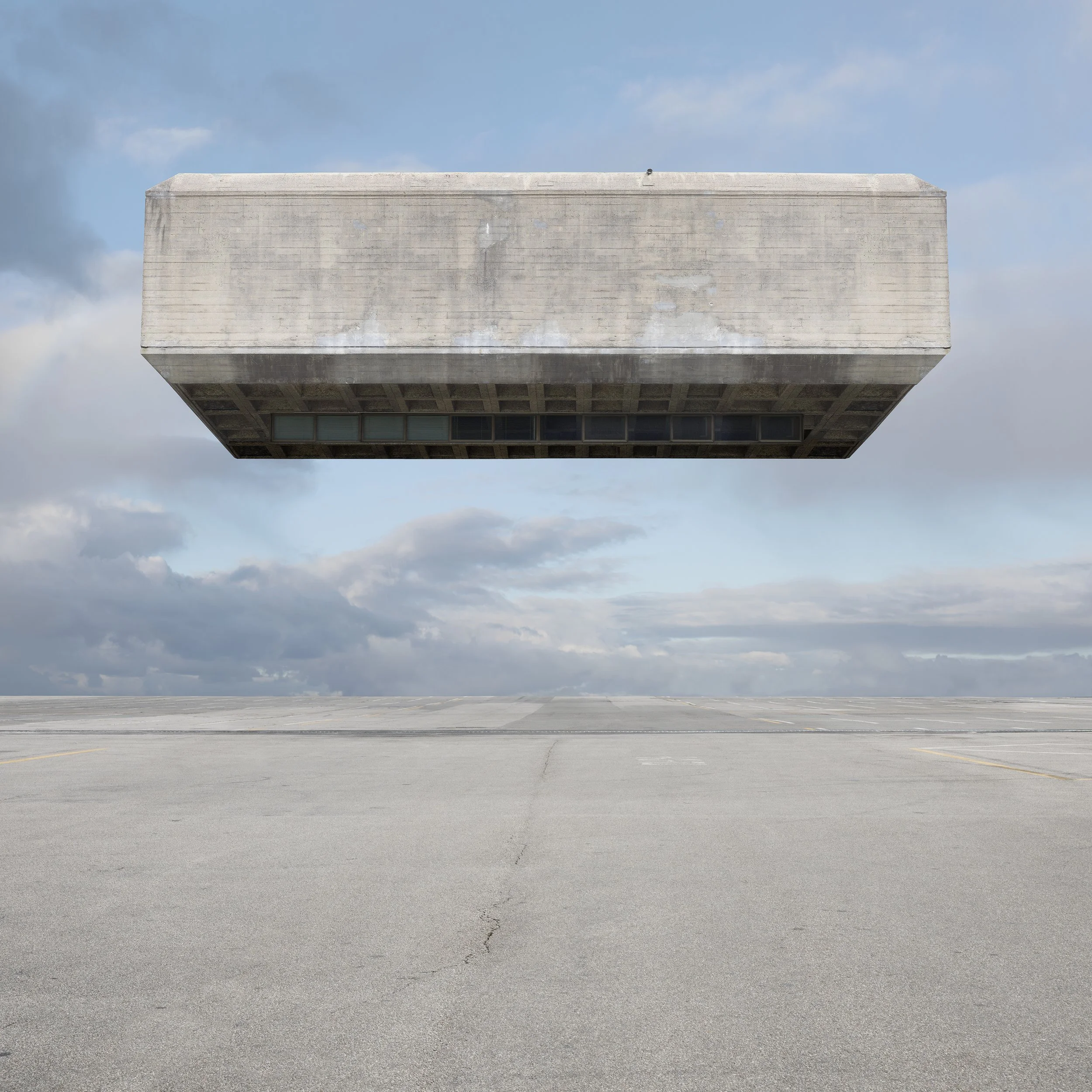
In Manley’s High Rise, titled after Ballard’s novel, a monumental concrete edifice hovers above a stretch of tarmac that recedes toward the horizon. The structure feels at once immovable and improbably weightless, as though detached from the ground it dominates. A pale light lingers in the sky, offering a faint glimmer of promise, yet it is what the building implies, rather than what it reveals, that unsettles. Ballard’s novel charts the psychological and social collapse of residents within a luxury apartment tower, where a self-contained modernist environment descends gradually into tribalism, violence, and primal disorder. Manley’s image captures that tension between architectural ambition and internal fracture, presenting the tower not as a site of overt destruction but as a vessel of suspended unease.
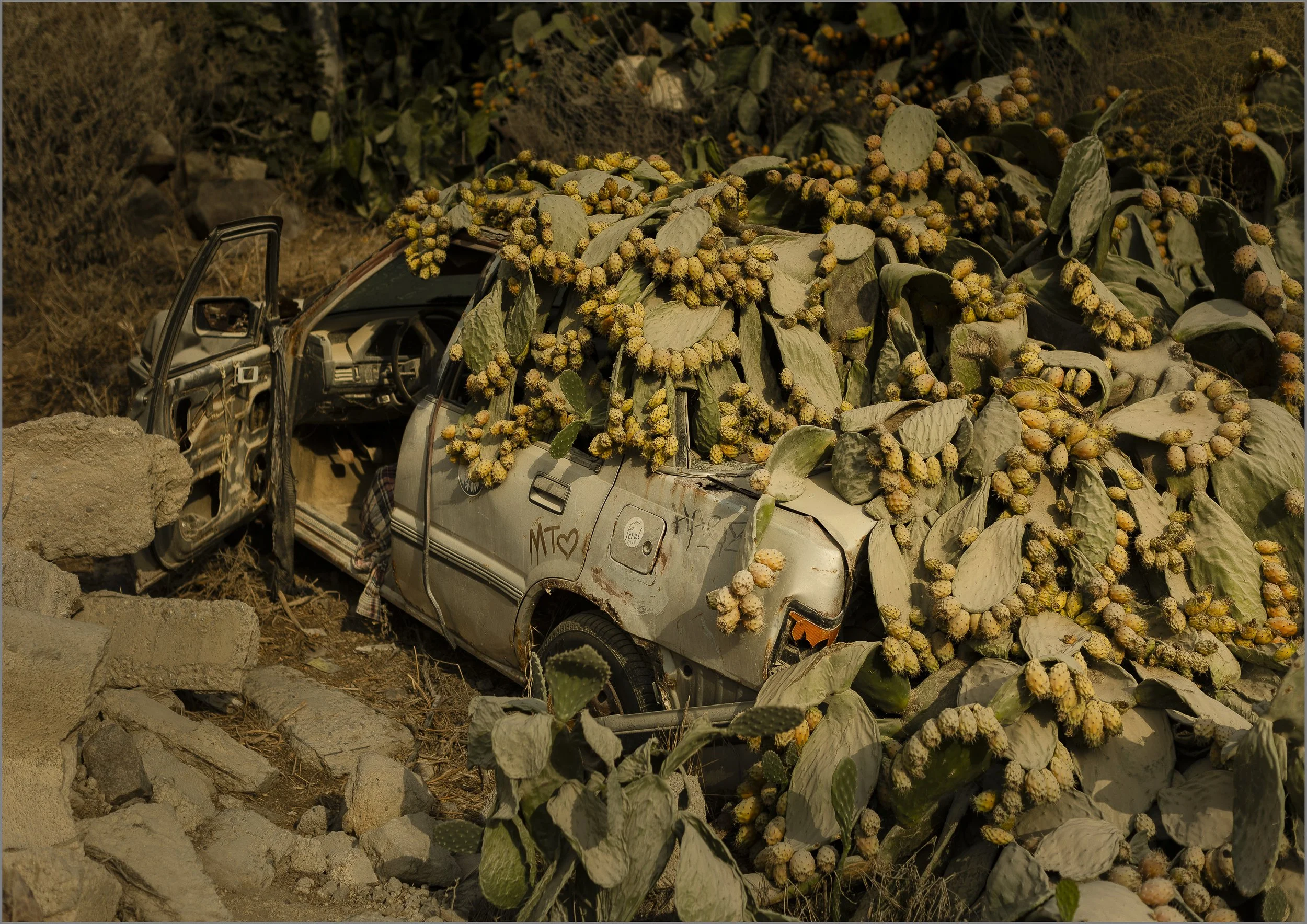
Wardhaugh’s Cactus Car operates differently. Ecological shift is implied rather than dramatised, conveyed through tone, light, and stillness. A dust-covered car, wedged into a field of concrete rubble, sits embedded within the landscape, its door left ajar. A discarded flannelette shirt rests on the empty driver’s seat. The visible surfaces of the vehicle are graffitied with initials and hearts, gestures of intimacy and vandalism layered onto abandonment. Crushed beneath the weight of a dying cactus, its yellow flowers faintly retaining their colour, the car appears suspended between aftermath and endurance, like the morning after a gathering long dispersed. The image does not announce catastrophe; it registers residue.
The exhibition does not offer narrative resolution. Instead, it asks for sustained attention, inviting the viewer to remain within ambiguity and to recognise that atmosphere, not event, often carries the deeper charge.
Ariella Azoulay describes photography as a “civil contract,” ⁷ a relational field in which meaning emerges between image, maker, and viewer. Within Between What Remains, that relational field remains deliberately unsettled. The viewer is drawn into oscillation between belief and doubt, document and fiction, presence and projection. The act of looking becomes collaborative, requiring the viewer to assemble fragments and inhabit ambiguity.
The title itself gestures toward photography as remainder, trace, and residue. What persists after memory shifts? What remains when landscapes transform? What lingers after presence recedes? Photography captures an instant, yet it also produces duration, extending the life of what has already passed.
Beneath the speculative dimension of the exhibition lies something quieter and more intimate. This is also a return shaped by shared beginnings, by love, by departure, and by the enduring resonance of formative landscapes. The remembered hospital, the artificial lake, the early suburban horizon function as coordinates of origin. From these beginnings, two practices unfolded independently, shaped by different cities, different urgencies, and different encounters. Yet the underlying terrain remained shared, a persistent echo in their respective engagements with architecture and land. This exhibition momentarily brings those trajectories back into alignment, not as nostalgia but as recognition.
If these works suggest worlds without figures, they remain shaped by human relation. Image-making becomes a means of holding memory, negotiating change, and tracing continuity between past and present. What remains is not only landscape, but connection, not only structure, but the conditions of seeing through which structure is understood.
To move through this exhibition is to inhabit a space between document and fiction, between recognition and estrangement, between memory and projection. The viewer is not asked to accept what is seen as truth, but to dwell within uncertainty and recognise that images do not merely record reality; they participate in shaping it. In this space, meaning does not arrive fully formed. It gathers through attention, through time, through sustained looking.
And so we return, as Gordon Bull always urged, not to certainty but to attention itself. To the image as proposition. To the recognition that what endures is not only what is seen, but what is remembered, interpreted, and carried forward beyond the frame.
Now LOOK.
Alexander Boynes
March 2026
Notes
1. David Levi Strauss, Photography and Belief (New York: Aperture, 2020).
2. Andrew Frost, “Towards a Miraculous Ambivalence,” in Ambivalent Structures: David Manley (Sydney: Emblem Books, 2015), 8–10.
3. Walter Benjamin, “A Short History of Photography,” 1931.
4. John Berger, Ways of Seeing (London: Penguin, 1972).
5. David Manley, The Traumatic Landscape: The Photograph as Temporal Contagion (PhD thesis, University of New South Wales, 2020).
6. Ibid.
7. Ariella Azoulay, The Civil Contract of Photography (New York: Zone Books, 2008).